
This railway now owns its own website, this can be found at:
wyvrail.co.uk
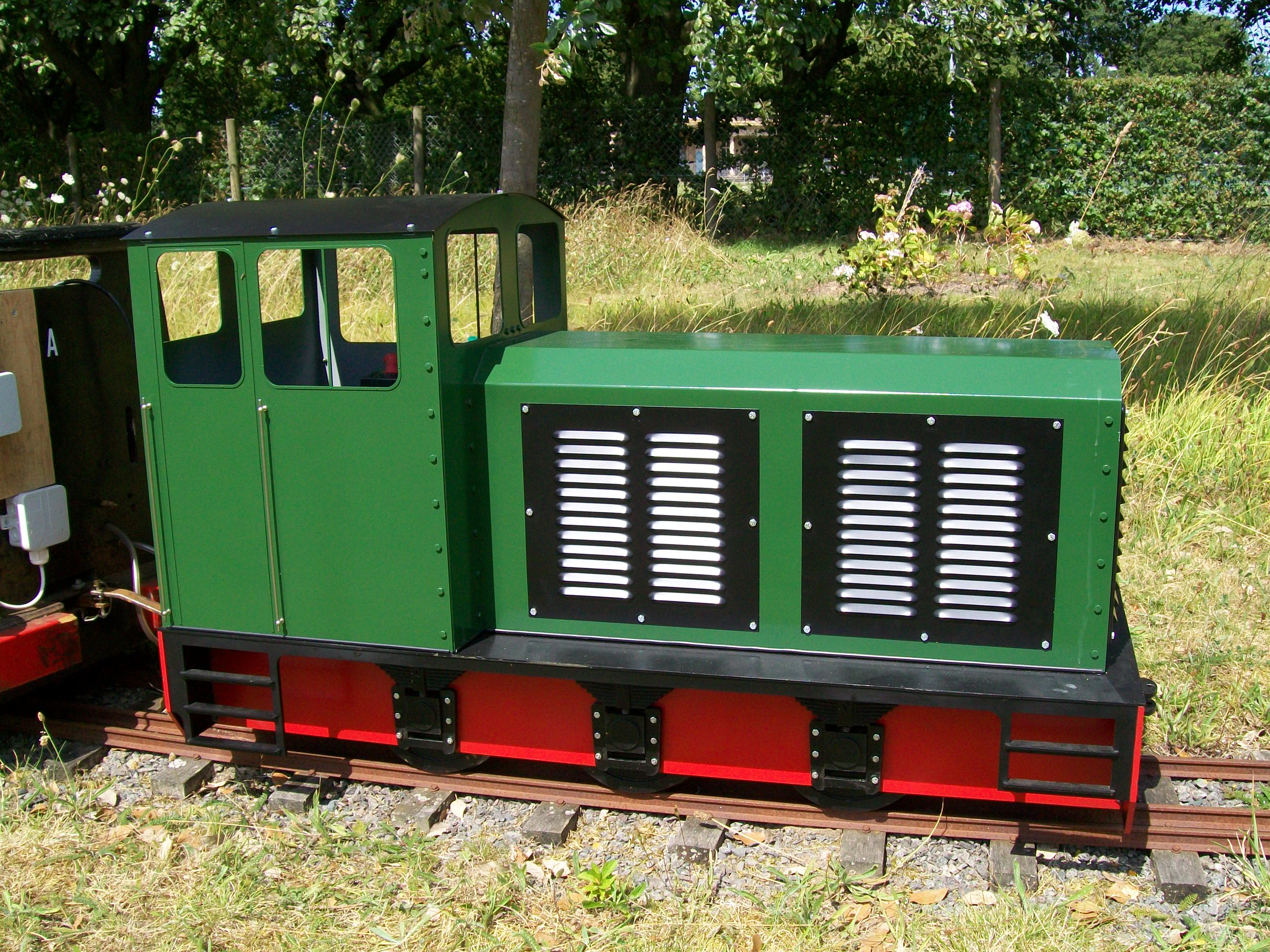
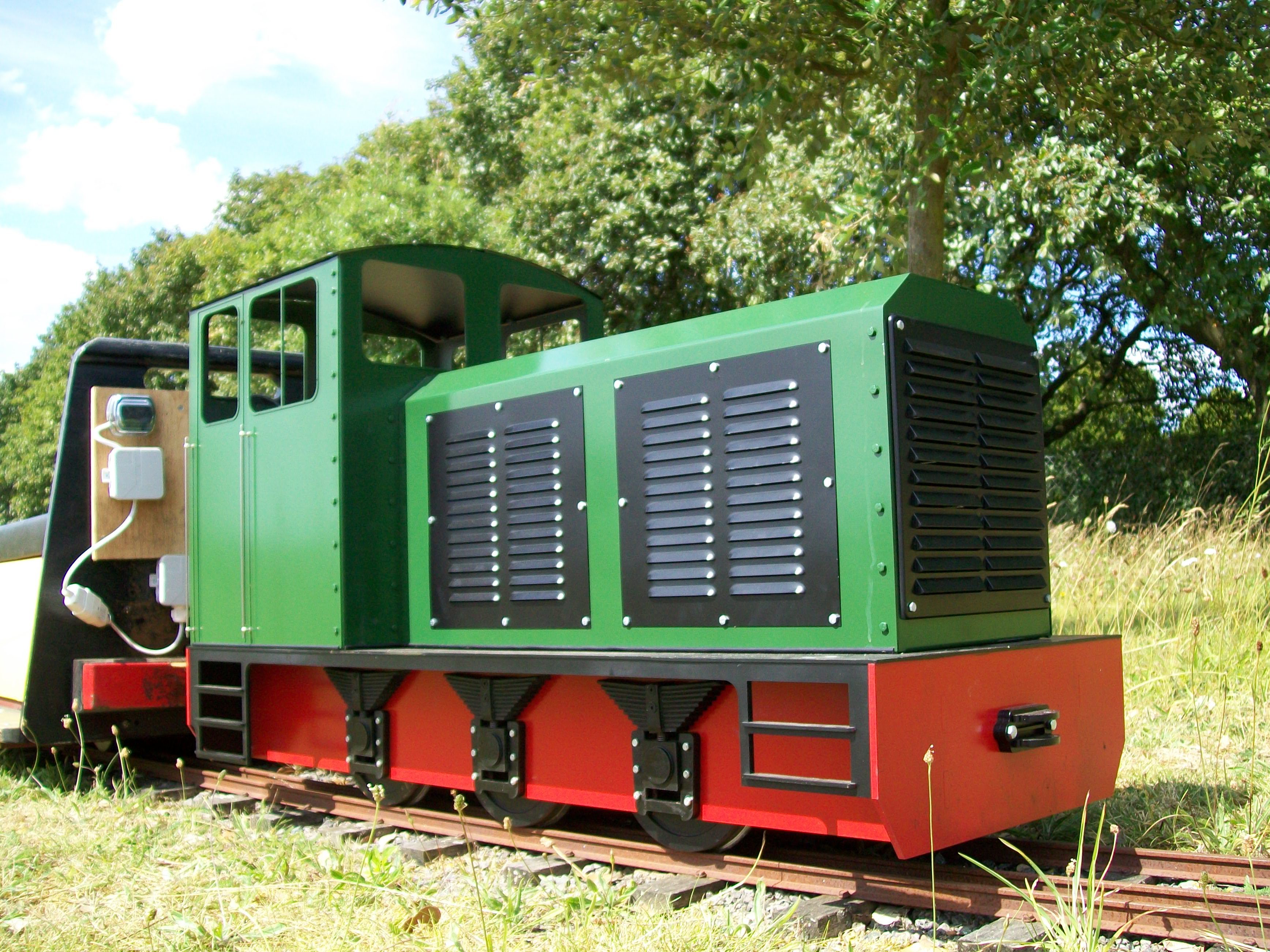
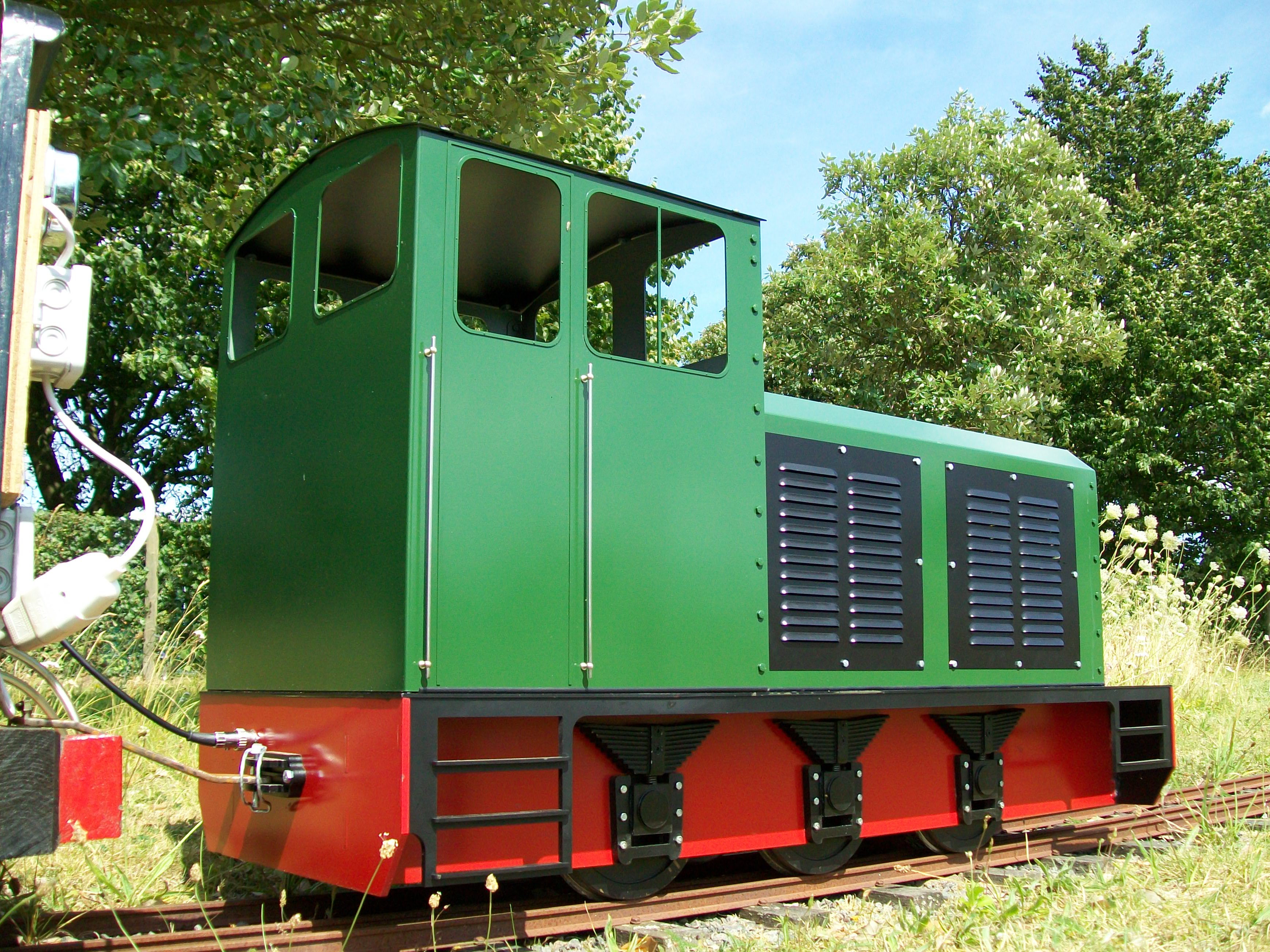
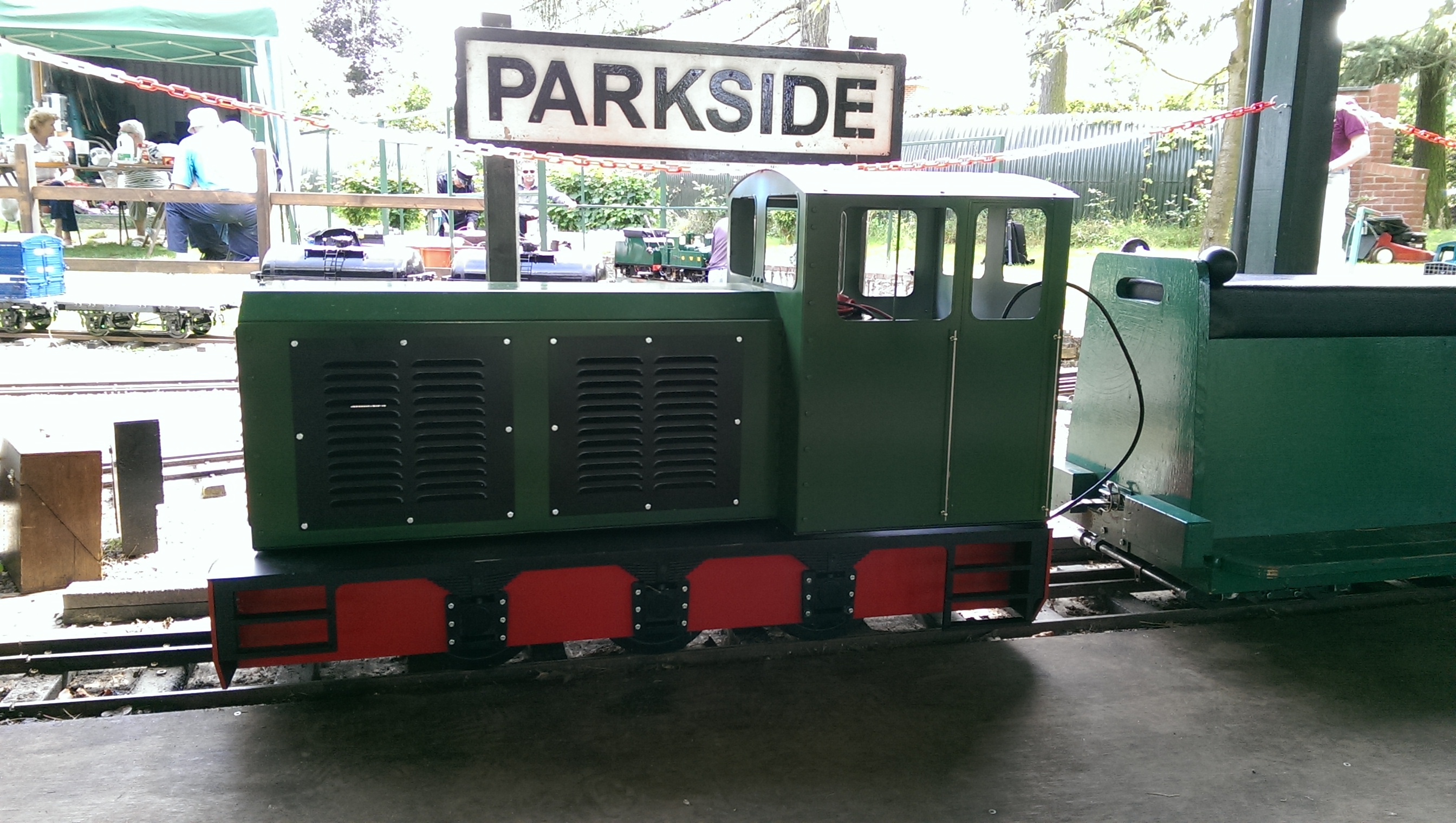
The CEO of this miniature railway is pleased to announce that it has completed the purchase of a ‘second-hand’ RoR Hercules 5inch battery powered locomotive. On the maker’s website it is listed as number 87. Full details of the maker’s products and technical specification can be obtained by visiting
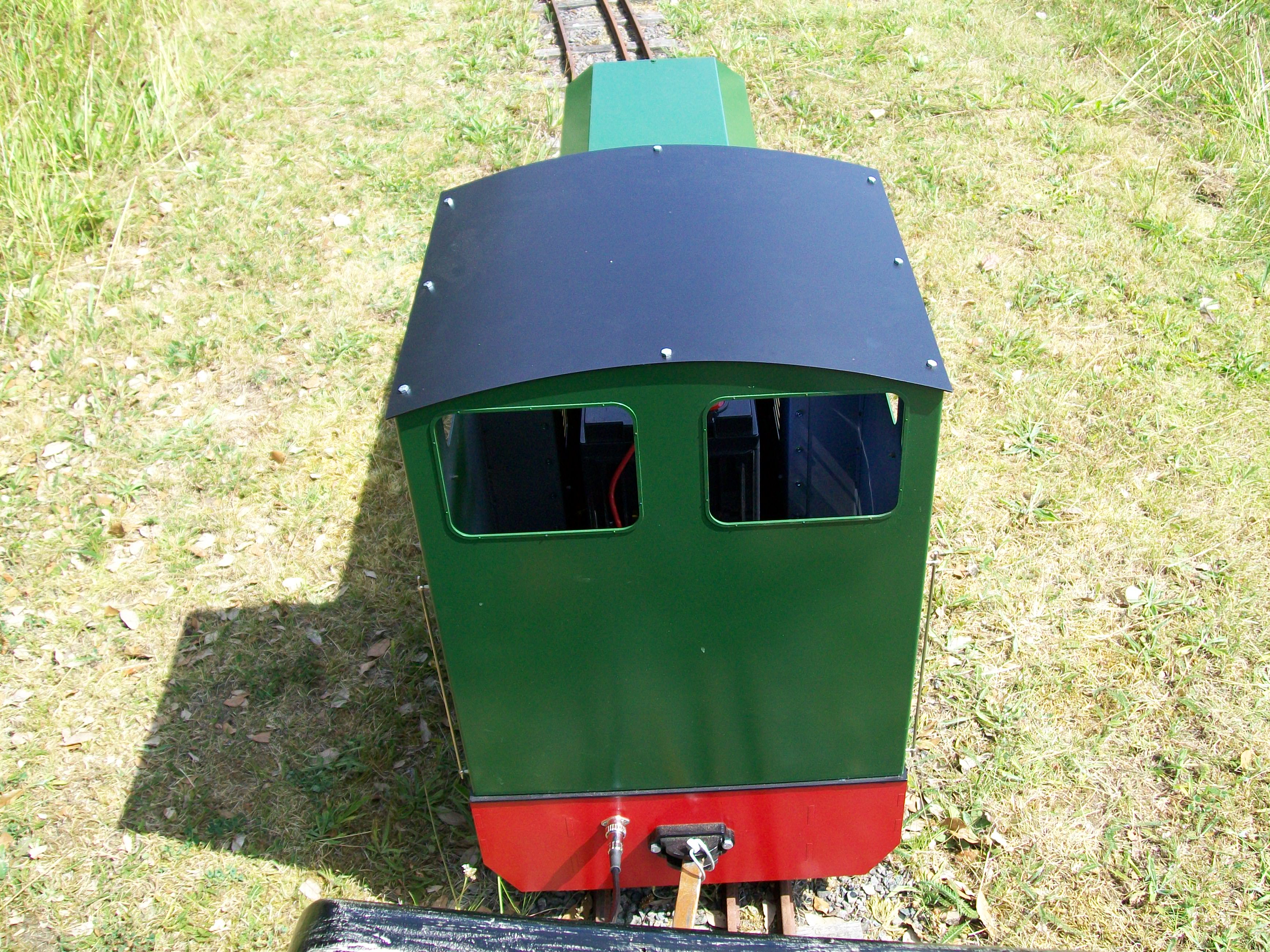
The loco is complete with a pair of new batteries and a dedicated 24volt charger. A permanent connecting fly-lead with a non-reversible plug/socket for the charger/batteries has been installed and this removes the need to disturb the loco body each time. It has been observed that the ‘driver trolley’ shown in this picture is not suitable for the raised railway and suitable pieces of metal and wood have been purchased. These have been shaped to create footrests for comfortable raised rail running. The loco has been in service during the 2012 season. A name is still being considered, at the moment ‘Austin’ is favourite. It has a family connection.
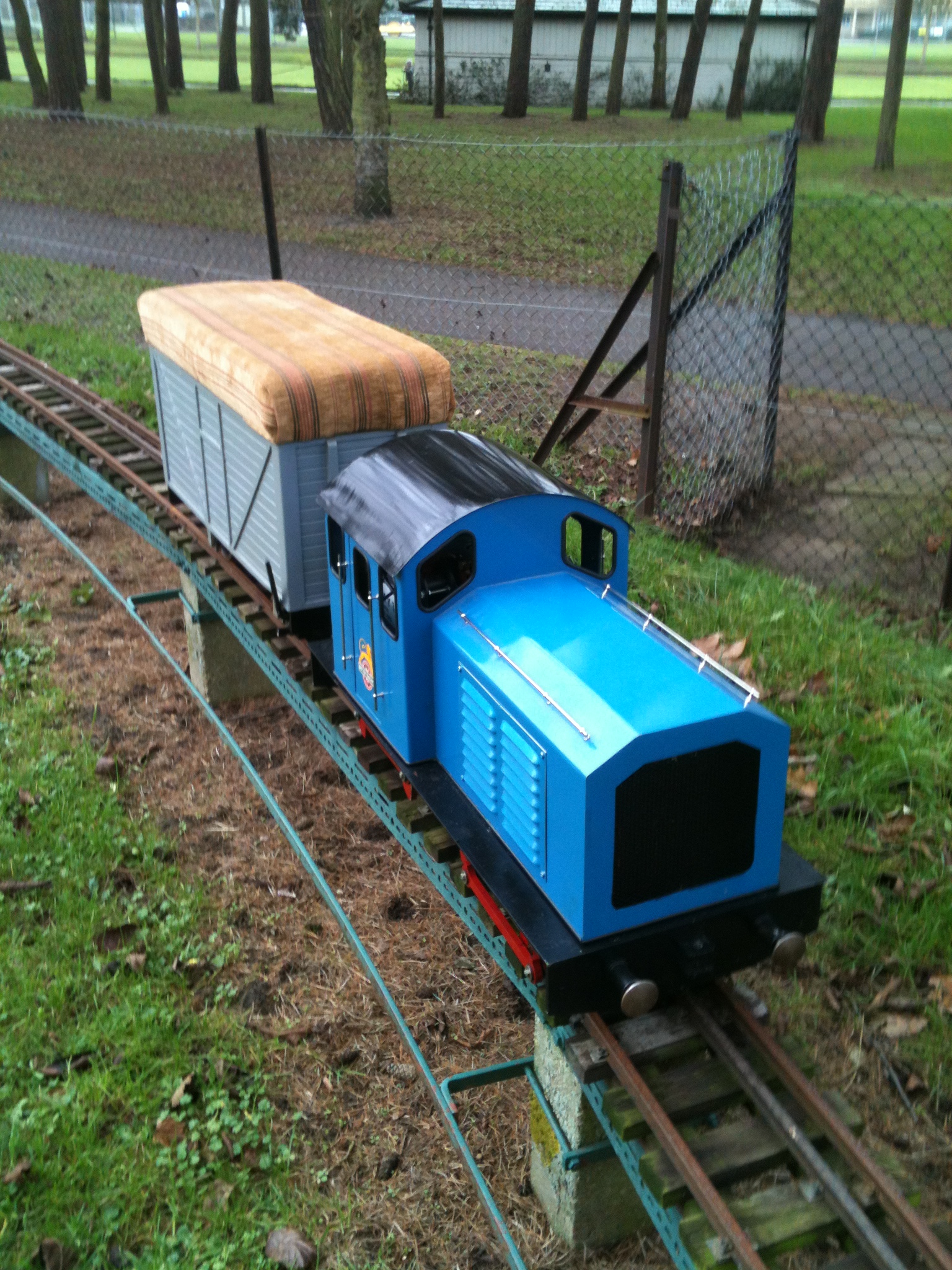
Posing on the main line.
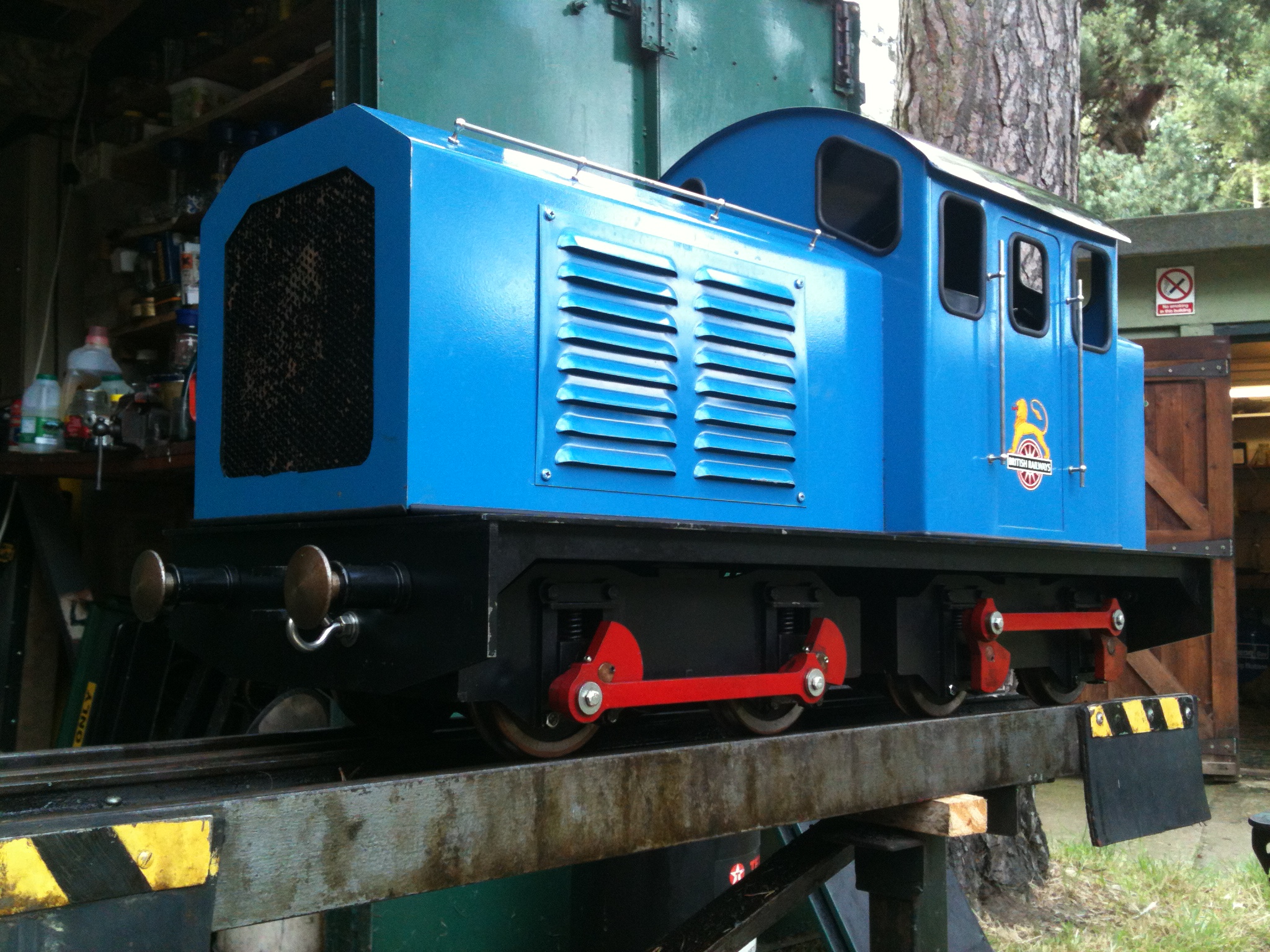
Chilling on the transverser.
The drivers’ trolley has changed colour and almost matches the loco. It was made to resemble a coal truck and those parts of it that would be metal have been painted black. The new drivers’ trolley adaption has also been painted to match. Most of the construction work has been carried out by son Andrew, whilst most of the paintwork is under the supervision of daughter Amanda. When the loco hauled its first fare-paying passengers a downpour of rain ended the session early.
In May 2012 the weather was very nice for a change. The loco was prepared for running and began with two passenger carriages. The good weather brought out the crowds and before long a third carriage was added. Would the loco handle it? Yes, of course! Towards the end of the afternoon a fourth carriage was added, tension mounts! By now, the batteries are half depleted. The day’s record for the loco was 4 carriages, 1 guard’s trolley, 1 driver’s trolley, 16 passengers, 2 crew and possibly 1 spider. The Eaton Park’s Class 17 Claydon holds the railway’s record for all of the above with 22 passengers although there might not have been a spider out playing that day!
But, theres a down-side. The wheels on the driver’s trolley separated from their axles and at least 2 wheels have visible scarring where they rubbed against the springs. Oh bother!
The wheels have been refitted but have come adrift again and have been refitted. This time though, it feels like they’re a little off true and the ride is a little strange. The loco meanwhile has been turned. The reason for this action is because a couple of members believed that the drivers of the full size locos preferred travelling with the short end going foward wherever possible. This action has meant an extra safety chain eyelet added. With the loco running in the opposite direction it seemed a little slow. This could be due to a slight difference in the gearing, a slight drag caused by the trolley wheels or the batteries only being ‘half-charged’ according to the charger meter at the start of today’s running. ( 24. June ). So, next time I’ll have to make sure the batteries are fully powered.
At the next running, the batteries were definitely fully charged, but it still seems slightly slow. An email to 4QD about this ‘problem’, returned the reply that possible ‘motor friction’ could be the answer. Don’t motors run at the same speed in either direction? Hey Ho!
At a recent running, there was a total control failure. Somehow the driver’s control box was whipped from the driver’s hand and all the wires ripped from the plug. Luckily, there was no damage to the 4QD box and all the wires were re-soldered into place. After about 90 minutes the loco was returned to passenger service and the driver concerned calmed from thinking that a replacement was going to cost a ‘bundle’.
The loco has since been turned again.
A little ps here: either one or both motors on the rear bogie have begun to smoke excessively and caused the loco to fail in service with a loaded train recently, this going to mean a total overhaul to assess the extent of the work needed to resume running next season, Oh bother!!
The rear bogie has been disconnected from the frame and the motors removed, one of them is definitely burned. The loco manufacturer has been called and says the replacement motors are £85 each. It could be said to be a lot of wonga, but they are pre-fitted with the pinion gear, so they are ready to place straight into the bogie and run. Both motors will be changed so that they are ‘matched’, leaving the ‘good one’ as a spare. Did I say, ‘ready-to-run’? What I should have said was, one of the three fixing lugs has to be removed from both motors and a part of the casing has to be filed down to squeeze them into position. Once that has been sorted, the wires have to be properly paired so that the whole bogie works in unison and correctly with the other bogie. Can’t have one half of the loco going forward when the other half is trying to reverse! The metalwork of the bogie has been ‘paraffin-washed’ prior to the reassembly.
Late in 2012, the whole fleet ran on a public day as a freight train. A lot of of passengers seeemed pleased to witness this different train. Before the tram can be used to haul the smaller blue loco, I need to fit a 100amp isolator switch to prevent back e. m. f. damaging the controller electronics. The switch has been purchased and awaits installation, more work! The isolator was fitted but found to be incorrectly done. This caused one pair of motors to be isolated and the other to be overworked which lead to acrid smoke billowing from underneath and almost a fire breaking out! It has been decreed since this photo was taken that a guards trolley must attached to the rear. Instead of just one man’s fun, a “second-man” is needed. Hey ho!
The motors have finally been re-fitted and loco appears to have turned by unknown others. All appears to be well, but not properly tried. In 2014, the club has decided to reduce the number of occasions that the raised 5inch gauge circuit is used for passenger running. This raised circuit now runs on the same Sundays that I volunteer at a different railway, so my loco doesn’t the same use. Awaiting to be fitted is both a two-tone horn sound card and speaker and a diesel engine sound card and speaker. No rest for the playful!
oooOOOooo
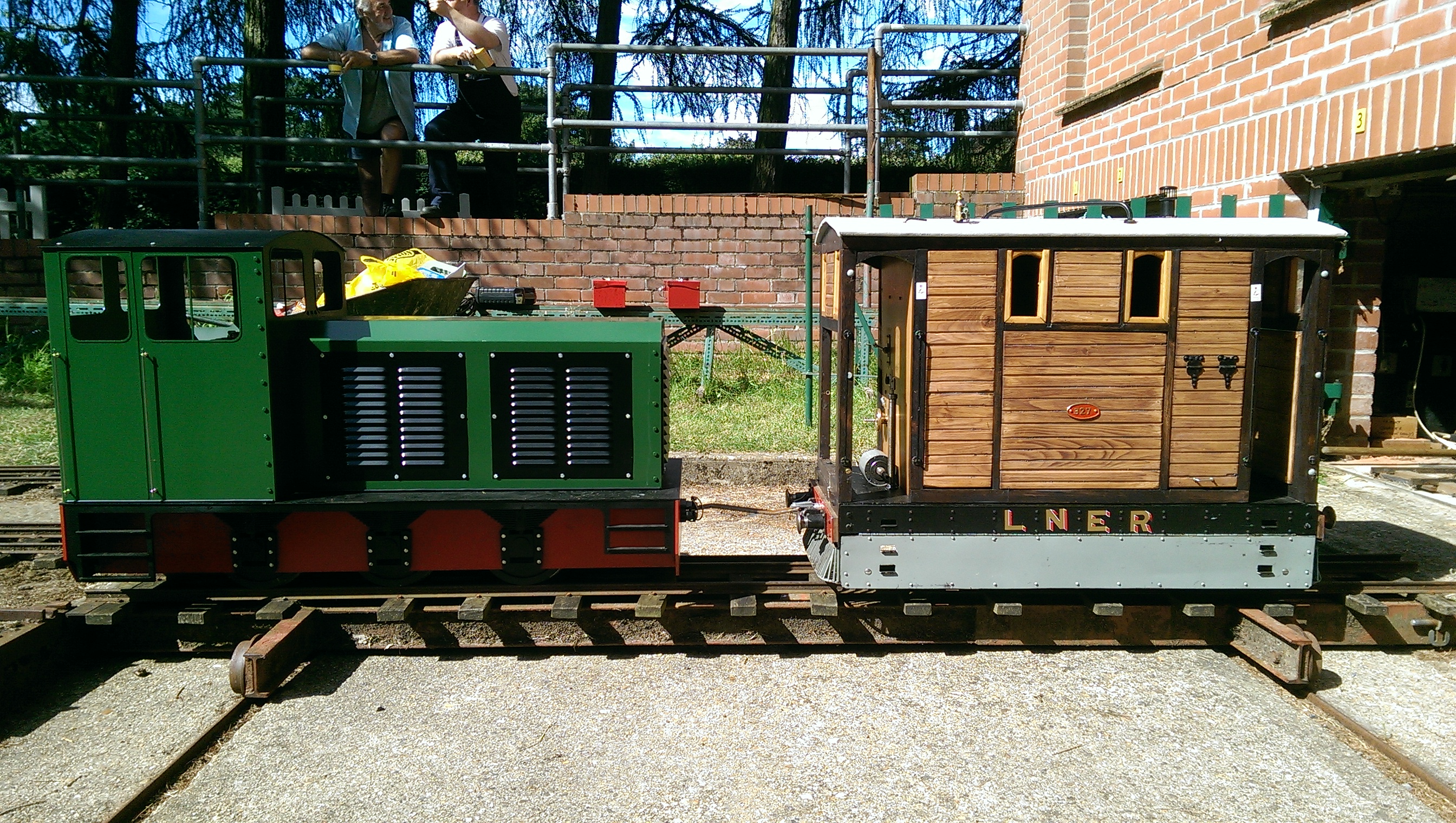
The W&YVR has acquired a petrol engined tram bought from www.stationroadsteam.co.uk
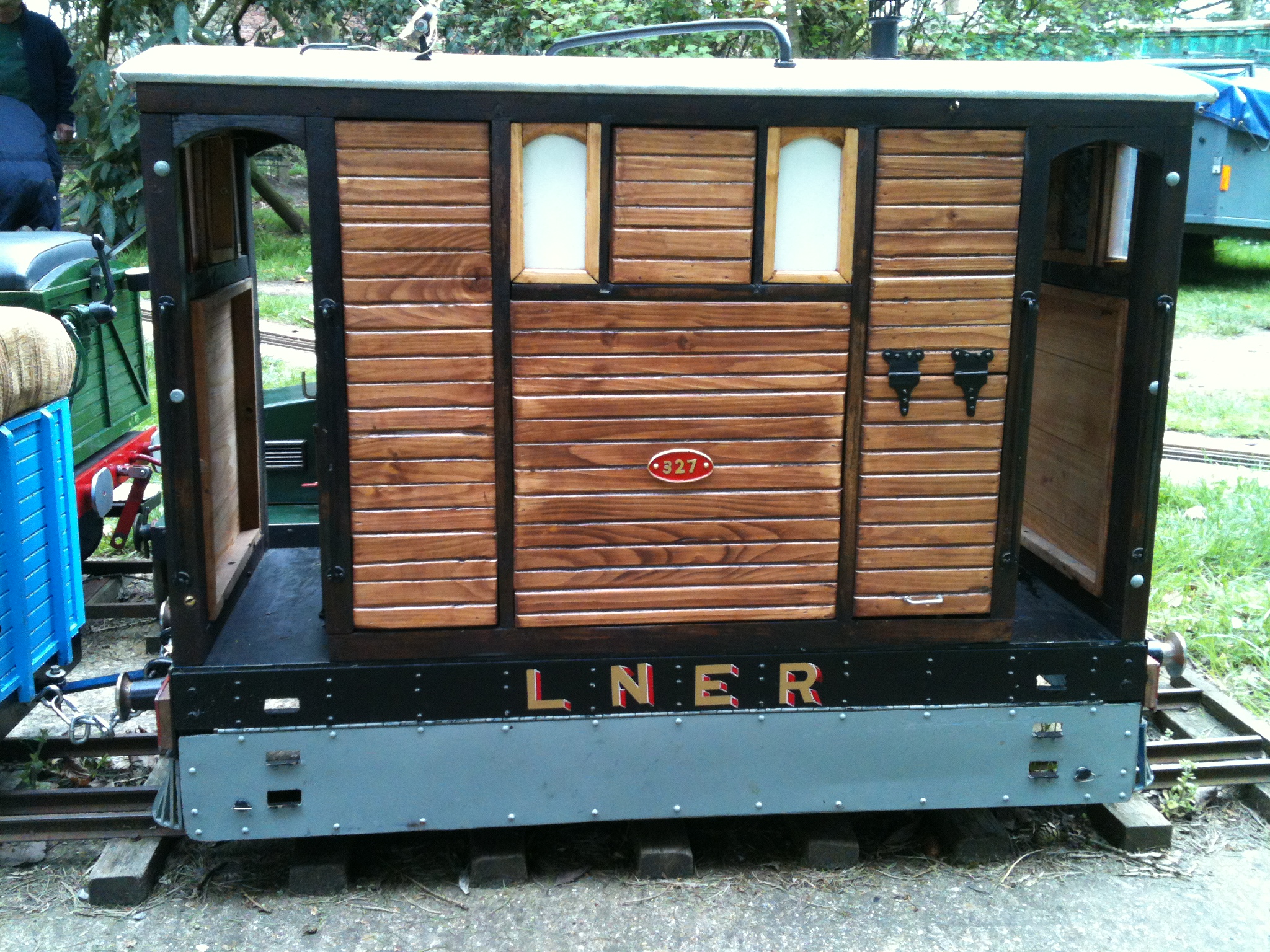
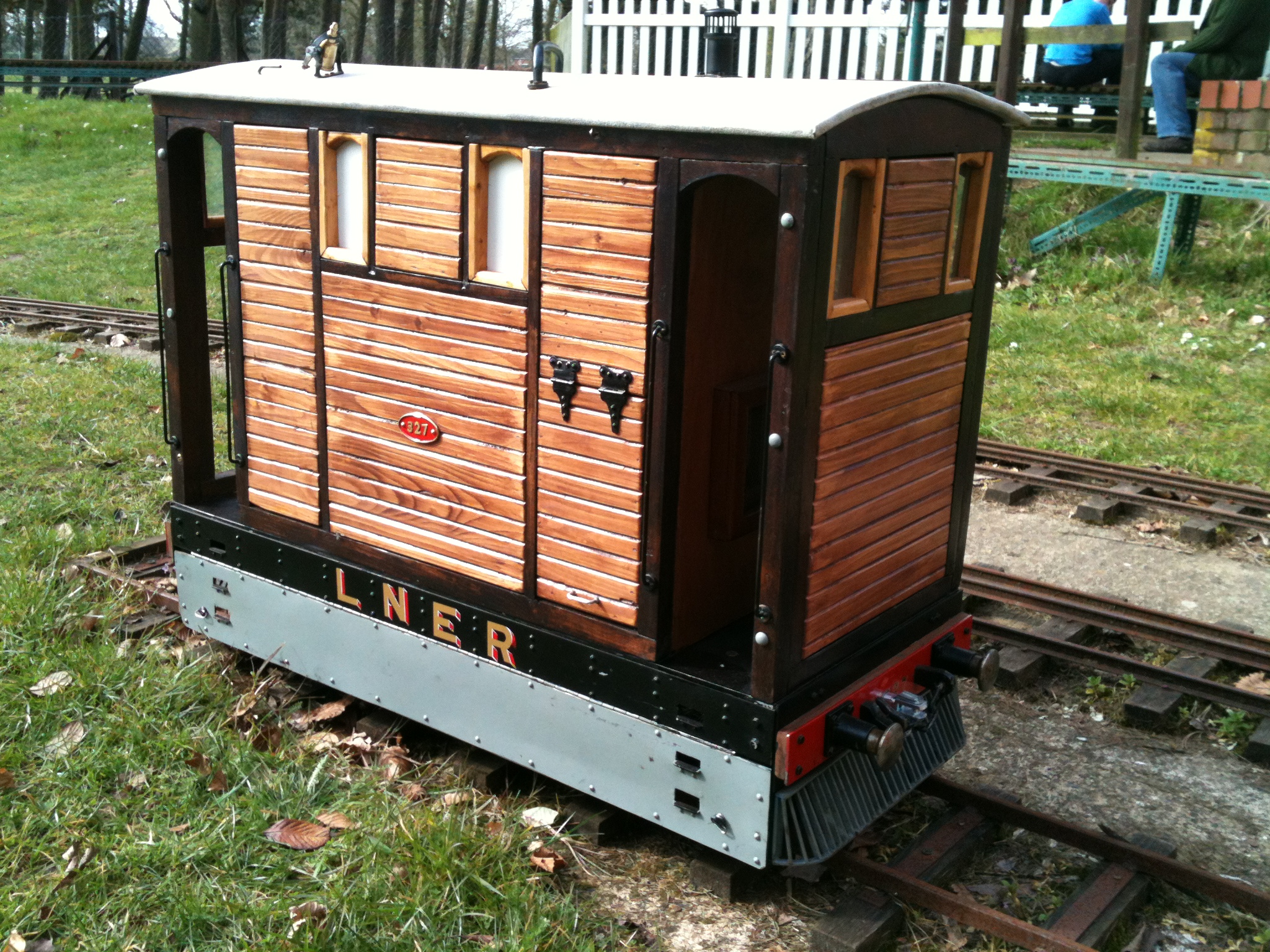
The tram was delivered to the home of the CEO and was relocated to Eaton Park Railway in time for Easter Sunday, 2012. Before the railway opened to the public that day, the tram was run around the track ‘light engine’. It did appear to go well at first driven by both Andrew and me. A passenger carriage c/w guard’s trolley was added but it seemed to struggle. A couple of circuits was undertaken without the roof on and it appeared that the ‘lay-shaft’ was out of alignment allowing the drive belt to slip starving the hydraulic motor of power. Upon inspection at the steaming bay, the nuts & bolts securing the shaft were sadly found to be inadequate for the purpose. Now that suitable fixings have been acquired and the holes made larger the shaft has been refitted. With transmission system sorted and tried, it became obvious that the throttle linkage needed attention. On closer examination, it was observed that the outer sheath of the bowden cable at the engine end, was loose causing nil action on the accelerator. During the adjustment a small essential spring pinged off which caused a frustrating twenty minute search. Luckily it was found in of course the last place you look and the repair was finished. At this moment the two body panels that were removed to gain access are not replaced. We decided to give the tram a couple of track circuits the following day as we set out the railway signs in the park to make sure all is well. It seems that as one problem is cured another appears! Hopefully no more problems!
Oh, spoke too soon! So, we made a couple of circuits, and it seemed better. We arrived in good time before the railway opened to the public and there were only two other locos out. The engine started from cold in two seconds and sounded much better. It struggled around the first bend in the track because the rails were wet and we didn’t get some momentum beforehand. Once we got going the tram settled down and began to give the impression that we could get passenger service from it. Our intention was keep running round to get some experience of its handling characteristics. Andrew insisted having a couple of runs solo and away he went. He seemed to take ages and when he returned it was obvious why. The belt connecting the engine to the layshaft had become shredded because it was noticed that the two pulley wheels were out of alignment. Oh dear, knackered drive belt stops play.
A replacement ‘V’ belt was acquired from a car parts supplier. It was wound around the pulleys but proved to be a fraction too large, luckily it could be returned and cash refunded. So, from an engineers supplier a new belt matching the original was purchased. Unfortunately, it can only be supplied in lengths of one metre minimum at a cost including VAT of £24. Ouch! With everything sorted, some more circuits were made. Guess what? The belt started shredding again! Thoughts now turn to swapping the belt and pulleys for chains and sprockets. The belt can’t cope with the power of the engine and I’m beginning to wonder if I can afford to keep spending on this apparent ‘lame duck’!
A little update here……
A set of sprockets and a length of chain has just been acquired for the grand sum of £20. Before they were fitted, the sprockets had to be drilled out from the pilot holes to the size needed to fit. I’m looking forward to this being the end of the transmission problems! ^
The sprockets have now been drilled out and fitted complete with the chain. Sunday 23 Sept Herman ran carrying fare paying passengers. All of it’s removed body panels have also been refitted. It successfully made a couple of passenger circuits and then it was noticed that a fault with throttle control had developed. It was very quickly overcome, but the rain drove passengers away. ( sob! ). Since this occasion, it has been noticed that the outer sheath of the bowden cable is in two separate pieces. This ‘problem’ has now been overcome.
More transmission problems:
It appeared that the hydraulic motor was leaking its fluid. This piece of equipment was removed during the winter 12/13 and was found to have a couple of seals weeping. Replacement gaskets have fitted and all bolts tightened. It now seems that the fluid loss has ceased whilst standing on a tissue on the workshop bench, so, the unit has been refitted to the body after having had it’s seat washed with white spirit to remove all traces of muck. The plan is now to run it round the ground circuit several times to see if the hydraulics are still secure under working load pressure. If this is so, the tram could well run passenger trips very soon. Surprisingly, I have had a couple of offers to purchase the tram with thoughts of converting it to steam. I’m not sure what to do with these offers. For me, the tram is quirky enough to keep it. I did see a Class 31 loco for sale which would have been an acceptable replacement, but spent too long thinking about it and now its been sold.
The tram has been named ‘HERMAN’ in honour of my paternal grandfather. He was born in April 1885 and died in May 1976. During his lifetime he was an engineer and during WW1 possibly gained several patents in the world of gunnery. Unfortunately, the success of ‘Thomas the tank engine’ has meant that people are already referring it as ‘Toby’. Its becoming hard work to stop this before it takes hold. The name, ‘Toby’. is a copyrighted word reserved to the famous stories. So please, if you see it and/or ride behind it, remember it’s true name. Spread the word! The tram based on the steam engines that ran on the now defunct ‘Wisbech & Upwell tramway.
^ Another transmission problem has overtaken us. Just when we began hauling passengers at almost the last public day, the major drivechain connecting the fluid motor to the axles parted, something I’ve never known before! Not even on a pedal cycle! The chain is the sort used on motorcycles. 3 more quid spent!
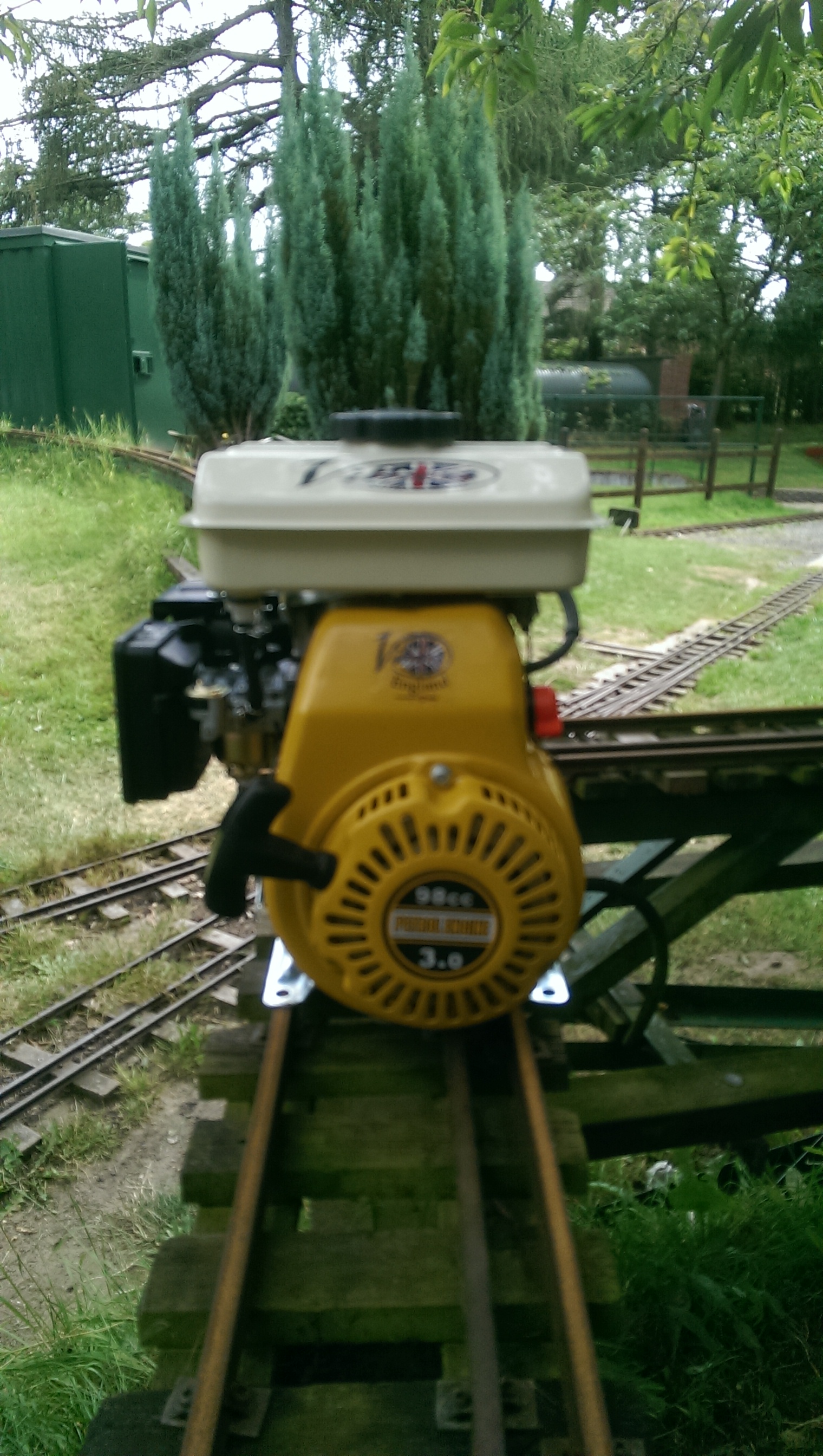
Another major problem has befallen the tram. After firing up for a run around the track, the engine stopped abruptly. It had escaped my notice that oil was non-existant in the sump. Yes, the engine had seized, oh heck! It was discovered that it was possible to rotate the engine using a spanner on the crankshaft. The oil was re-filled and the engine fired up again. It soon became apparent that it was burning oil, meaning at least the bottom ring was damaged. This turn of events has meant a new replacement engine was obtained via Ebay for the princely sum of £105. The old Honda G100 unit has been removed and the replacement Villiers 3HP 98cc bolted in. A couple of bits from the Honda were needed to enable the Villiers to slot in precisely. The tram was then shunted slowly into the shed under its own power, but has not yet been fully tried out on the track. A delight yet to come. Fitted with this new powerplant, the problems have not ended. It was insisted that an engine kill switch needed to be added. Linking this into the wiring meant a little head scratching concerning where to best site it and where to connect it. This has now been sorted, but since then the engine has become a devil to start and then to stay running. Obviously, a gremlin has crept in somewhere. Now need to acquire an anti-gremlin tool to extricate the blighter!
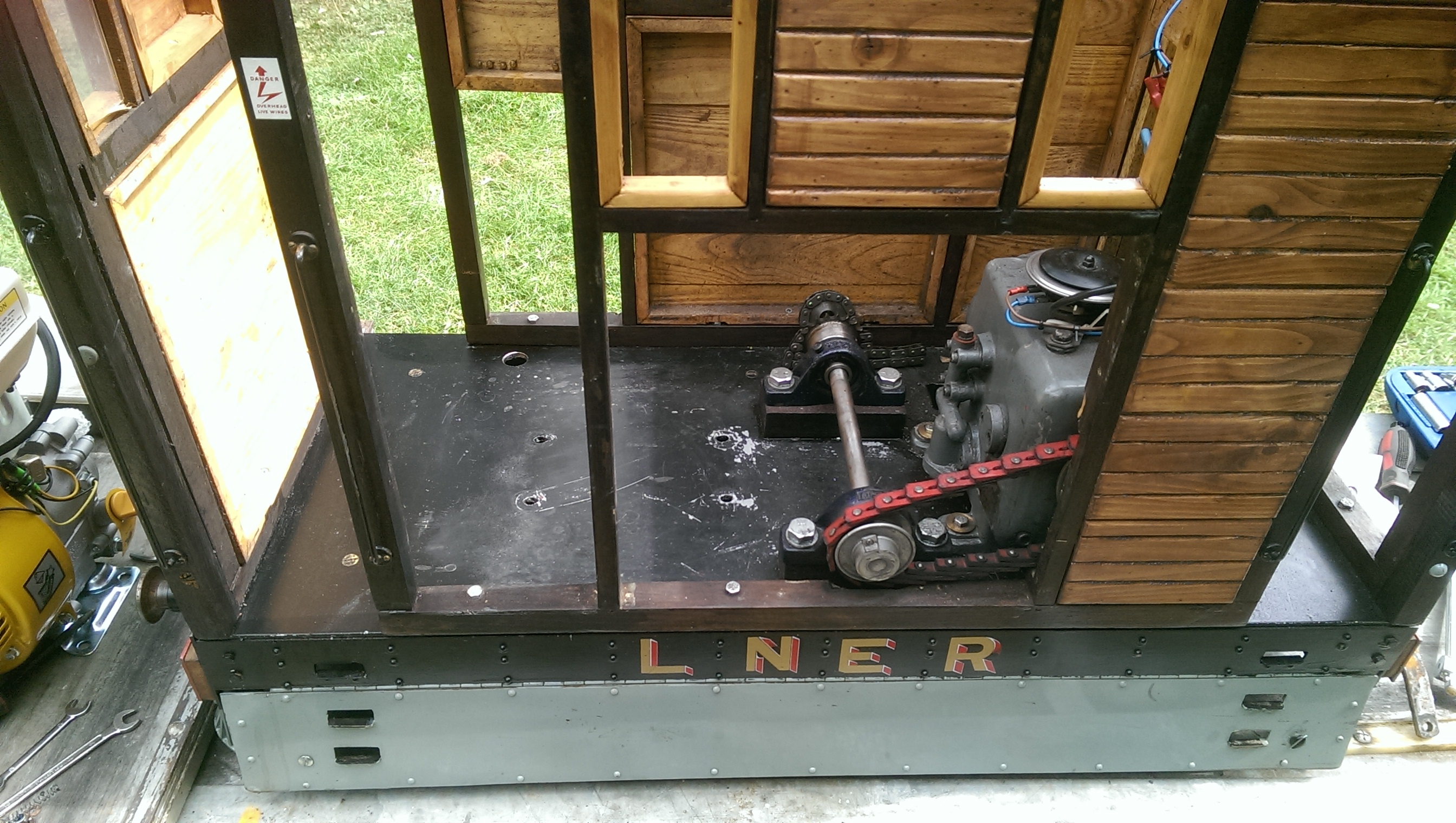
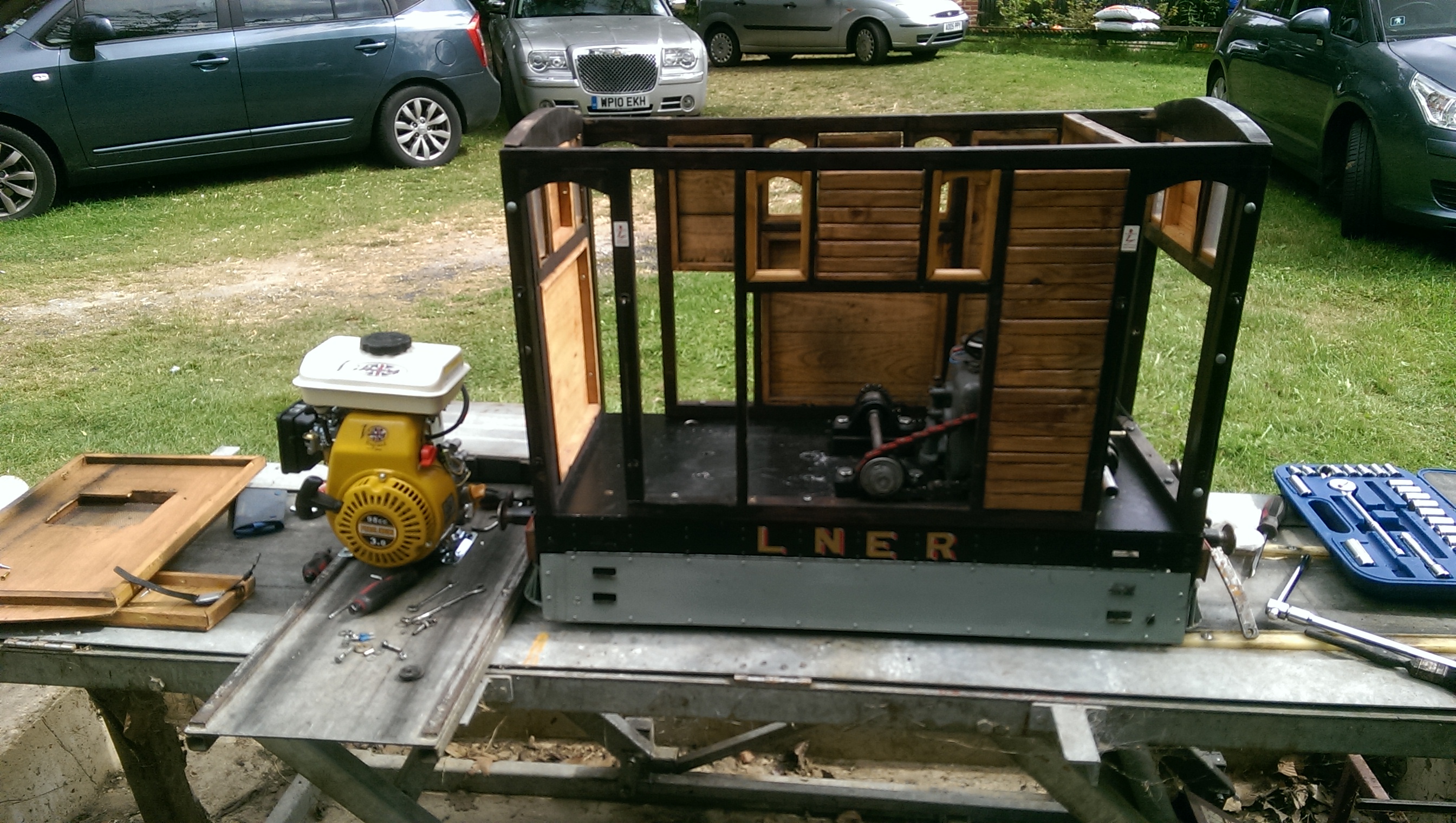
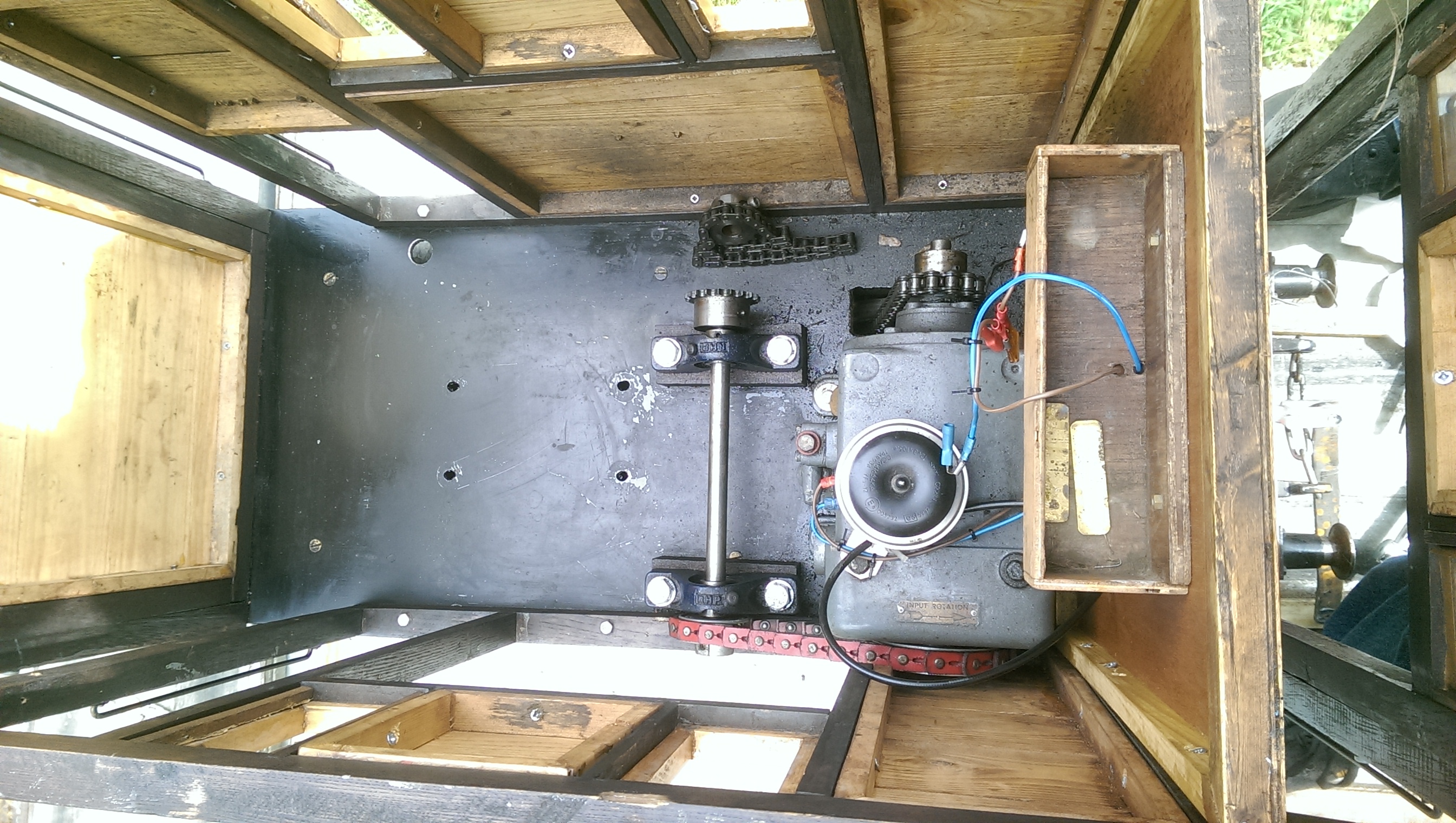
You will note from the Eaton Park Railway page that one of the members has changed the body of his loco. The ‘old’ surplus body has been purchased by this railway with the intention of acquiring a pair of commercial built powered bogies. It is likely now the tram has joined the fleet that the plan to re-bogie the other loco body might not happen. If this is the case the old body could well be sold.

Just the other day whilst browsing www.wikipedia.org, I saw this image of the loco that matches the one that ran at Eaton Park. This is the loco body awaiting the decision as to which new power bogies are acquired. *
In another development here, a petrol engine has been acquired with a view to creating a DMU train roughly based on the design of a Class 170 Turbostar or a GWR Banana. The petrol engine will drive a generator and the speed controller attached will modify the strength of the current to the generator’s field coil to give actual speed control to the motors mounted on the bogies. The DMU was inspired by a club visit to the Canvey Island railway undertaken in 2012. The NDSME committee has now decided to replace all of the passenger carriage bogies after successfully trialling a new design of bogie. When the order was placed for the pre-cut metal, a suitable extra amount was added for my DMU bogies, this increased order will bring down the total unit cost of them all. I now need to acquire a pair of 1HP electric motors in order that they can be installed as the bogies take shape.
Since this last paragraph was written, the thought circulating in my mind is to build a new tram loco similar to Herman. This one will be a petrol-electrical driven machine. The thought was inspired by a ride on the Wells-Walsingham 10.25inch gauge railway in North Norfolk. Take a look at wellswalsinghamrailway.co.uk they have a tram loco named ‘Weasel’.
Watch this space!
oooOOOooo
Another new development to herald!
An order for brand new 7.25inch gauge 0-6-0 shunter loco, product name Taurus to join the fleet has been completed. The manufacturer is compass-house.co.uk and technical details can be found on their webpage online.
The loco has been relocated to Norfolk after an all day round trip to Rotherfield in East Sussex. On that day there was also time to purchase a set of 160amp/hour batteries and a suitable charger. A figure in the region of £3300 has disappeared from my finances recently.
Unlike my 5inch loco, this one cannot be readily turned to run in reverse. The controller needs an electrical connection to be changed and the hand-held control lead is too short. This can of course be overcome, but for now, not essential. Unfortunately, some running problems have been encountered, both electronic and mechanical, these have been intensively checked by the builder recently and so far, appear to have been resolved. Only time will tell if this loco is fully functional and fault-free.
Yet another development to herald
A common use driving trolley has joined the fleet. Purchased from Abbots Model Engineering it is ready-to-run.
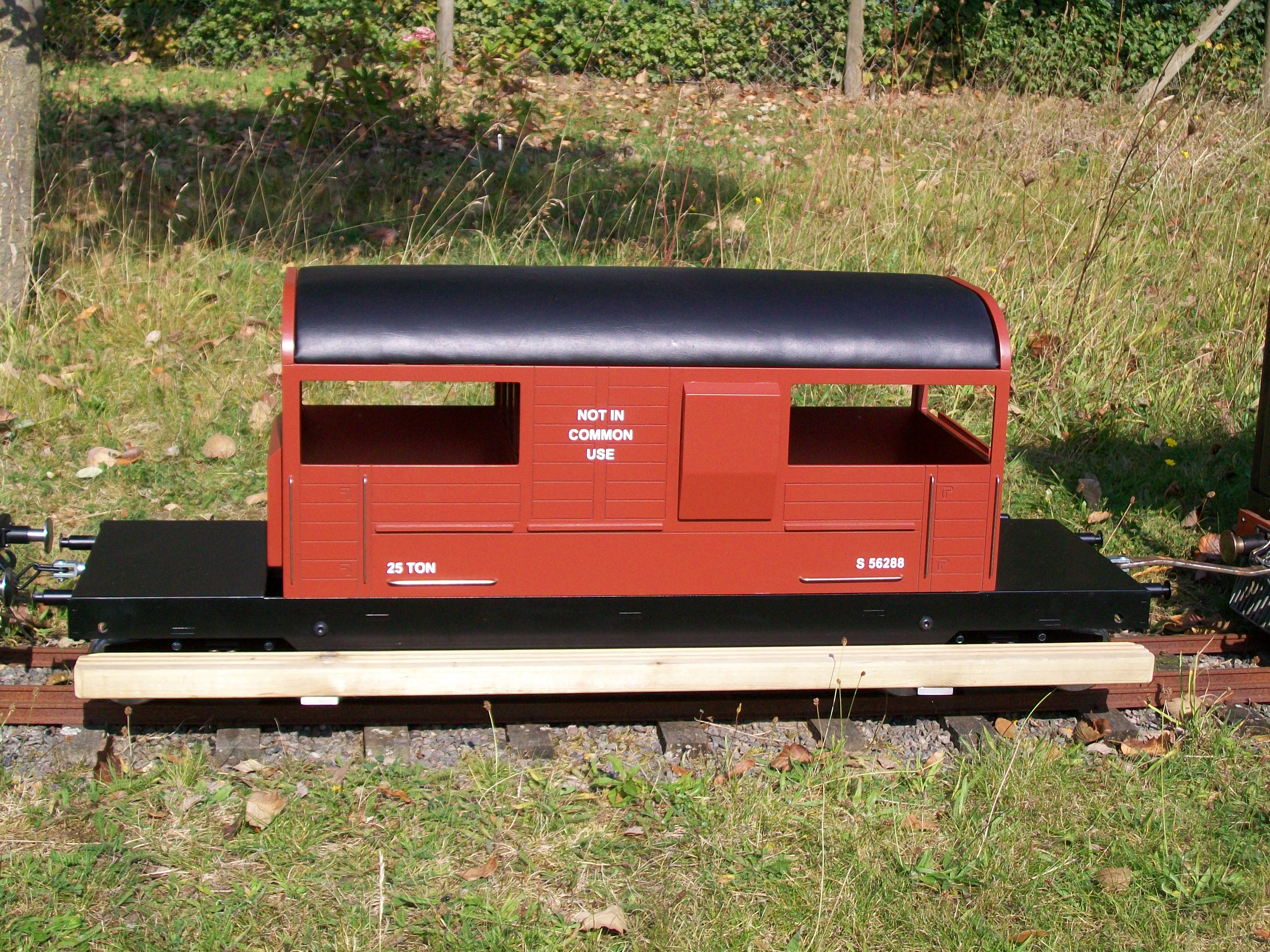
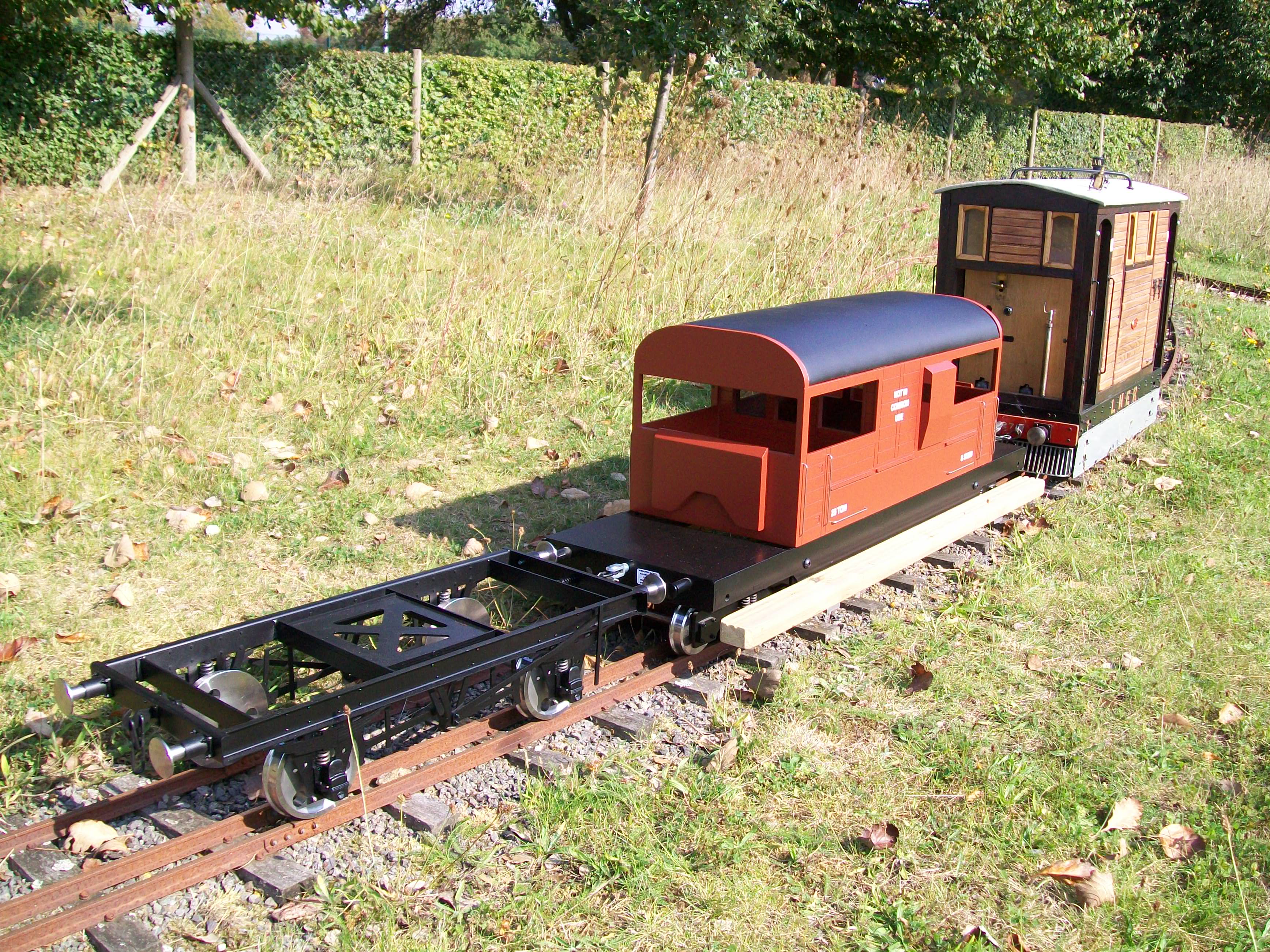
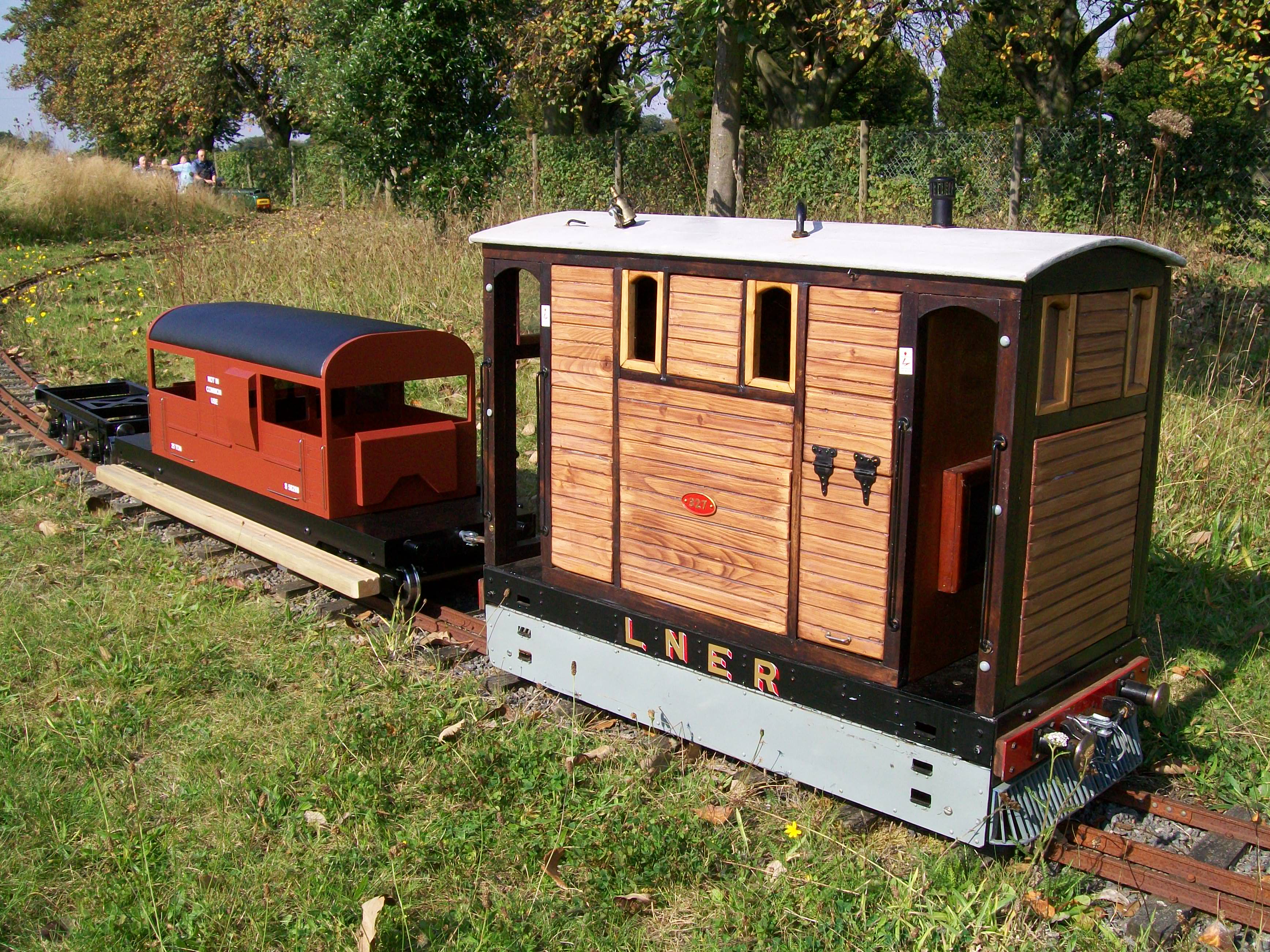
Also included in these 3 images is a 17D Miniatures ready-to-run chassis. A body in kit form has been purchased from the same company. It awaits one of those ’round-tuit’ moments! In yet another development, some freight wagons have been acquired second-hand to form a complete freight train to run amongst the passenger services on the line.( pictured below ). Since these pictures were taken, 5 wagons including 3 coal trucks have been sold at a loss.
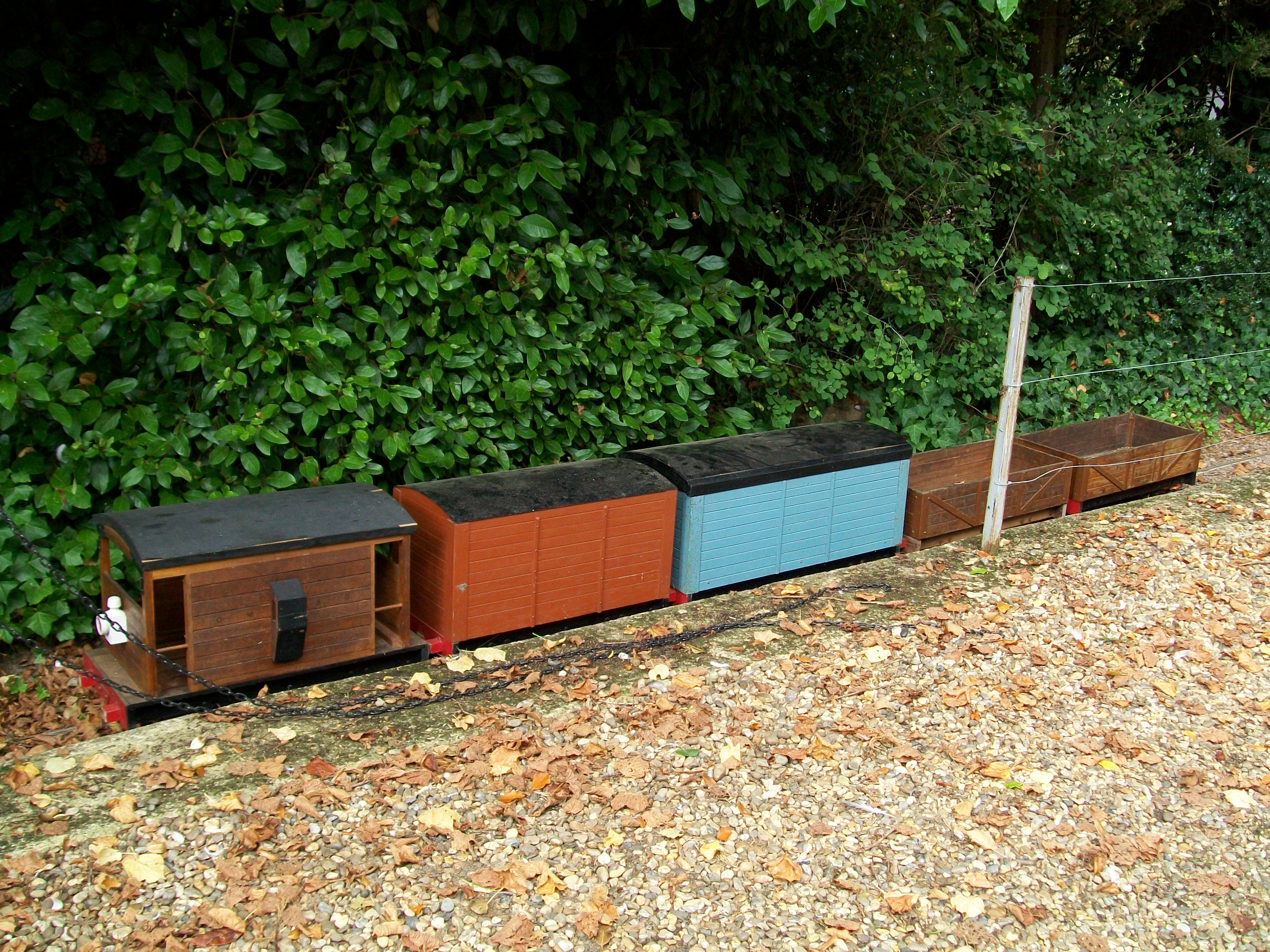
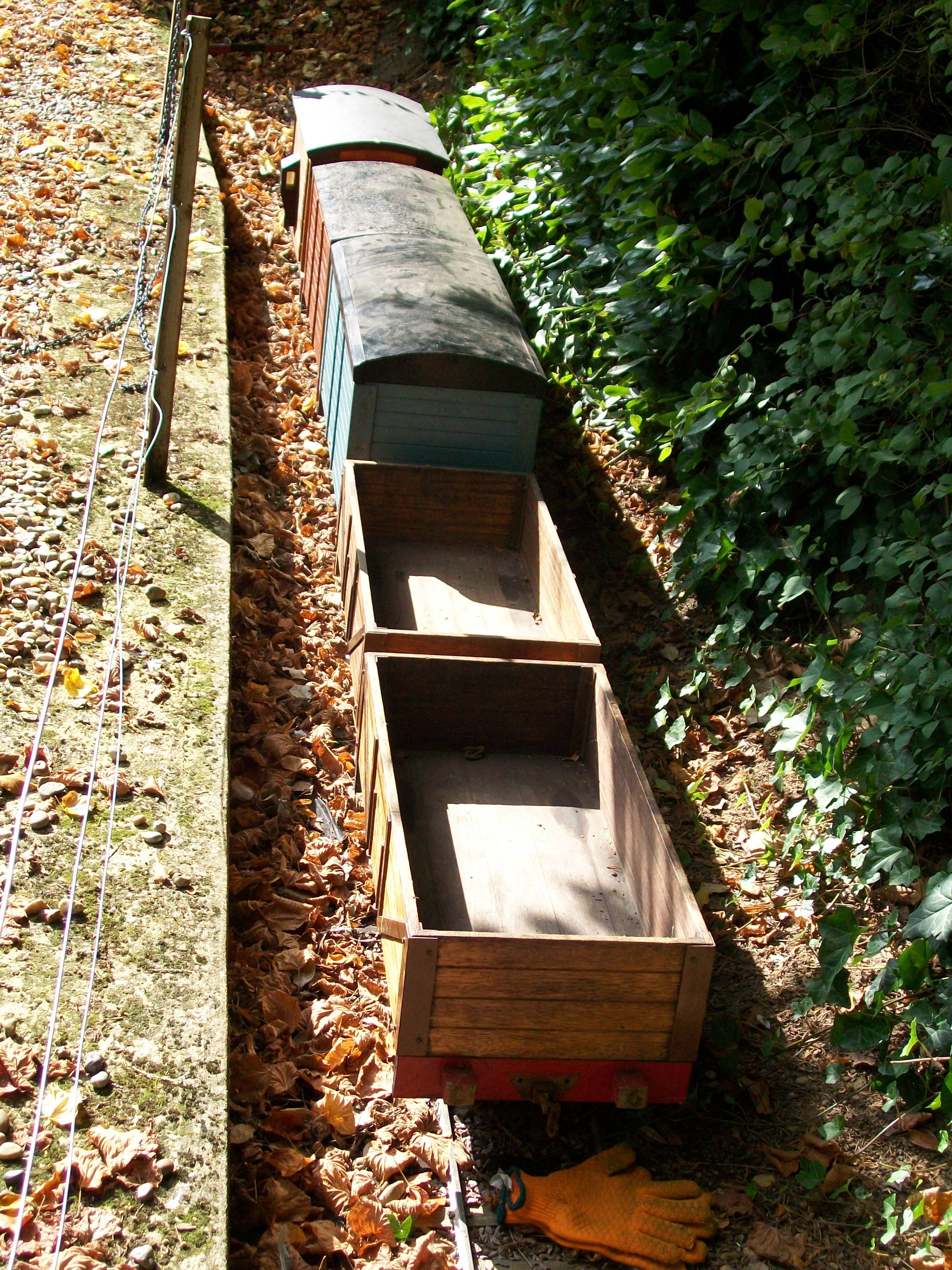
This is in addition to another member’s steam hauled freight train which is also formed of 17D rolling stock.
* http://en.wikipedia.org/wiki/File:NorthEasternRailwayNo1-Locomotion-Shildon-April2008.JPG

If there is a problem with the use of these images here, please make contact with this site.